


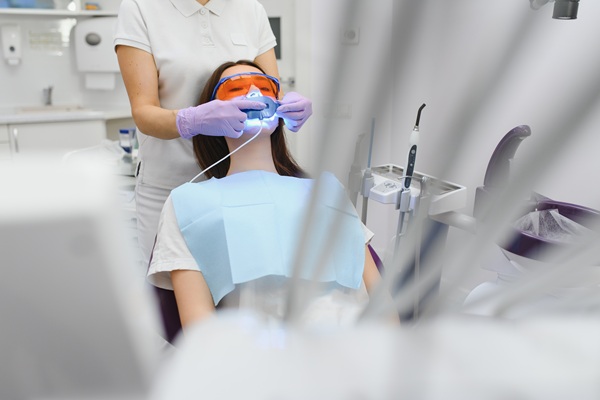
Laser dentistry is a less invasive way to treat gum disease. Continue reading to learn more about how laser dentistry is used to treat periodontal disease. Gum disease is caused by oral bacteria in plaque and tartar building up on teeth roots and gum pockets. Plaque, a sticky film that develops in the mouth, contains bacteria and the acids they produce. It hardens into tartar when left on teeth surfaces for more than 24 hours.
Bacteria getting below the gum line leads to an immune system response. Antibodies are dispatched to deal with the invading germs, leading to the inflammation that characterizes gum disease.
Treating periodontal disease with laser dentistry
Gum disease occurs in two distinct stages: gingivitis and periodontitis. Gingivitis is the first stage of gum disease, and the inflammation is not chronic at this point. It often occurs with symptoms like bleeding and inflamed or receding gums.
Periodontitis is the advanced stage of gum disease. The infection is chronic at that point. The inflammation damages the bone and soft tissues that hold teeth in place, loosening teeth until they eventually fall out. Periodontitis is the top cause of tooth loss.
Some of the conventional treatments used to treat gum disease, like gum flap surgery, involve dealing with discomfort for weeks after getting the treatment. This is caused by the dentist pulling gum tissues off teeth roots to clean them. The patient does not feel discomfort during the treatment since local anesthetics are used, but they will have to deal with significant discomfort as they recover.
Laser dentistry gives dentists a less invasive way to remove tartar on teeth roots and gum pockets without manipulating gum tissues as much. Laser gum disease treatments are typically combined with other traditional treatments. Laser gum therapy entails using a laser to reach and remove inflamed gum tissues, plaque, and tartar around tooth roots.
The dentist will later use a tool to smooth out rough spots on the patient’s teeth. This makes it harder for tartar and bacteria to build up on teeth. Laser therapy also comes with a recovery period, so patients might deal with some level of discomfort afterward. However, the discomfort experienced is nothing like what people who get conventional gum disease treatments have to deal with.
Some of the benefits of choosing laser treatments for gum disease over conventional ones include:
- Shorter recovery periods and faster healing
- Lasers are more precise than the traditional tools used to treat gum disease
- Anesthetics are typically not needed for laser gum therapy
- Laser therapy is less intrusive than traditional treatments, and it causes less inflammation, bleeding, and pain
Recovery after laser dentistry treatment
The length of each patient’s recovery period varies based on several factors like their health status, the severity of their gum disease, and the wavelengths of laser used for the treatment. There might be some minor swelling around areas that were worked on and some light bleeding.
Frequently asked questions about laser dentistry
Time to go over some commonly asked questions about laser dentistry:
1. What are the benefits of laser dentistry?
Laser dentistry provides less invasive treatments that often negate the need for local anesthetics. That is good news for the millions of people who have dental phobias, like a fear of pain. Laser dentistry often removes the need for some of the more intimidating tools used by dentists like drills.
Other benefits of laser dentistry include:
- There is no need to deal with the anxiety caused by injections or intimidating dental tools
- Laser dentistry minimizes bleeding and swelling as a result of dental treatments
- Lasers seal blood vessels as they cut into soft tissues during treatment, encouraging fast blood clotting and removing the need to stitch incisions made with a laser
- Procedures performed with a laser have a lower risk of infection compared to when conventional dental tools are used
- Lasers are more precise than traditional dental tools, allowing dentists to minimize trauma to the area being worked on
- Patients typically recover faster after laser treatments since there is less trauma and bleeding
2. Can children get laser treatments?
Laser treatments are for patients of all ages. Lasers are a better alternative for children since they are less invasive than conventional treatments. Children often do not like getting injections or dentists working on their mouths with scary-looking tools. Laser dentistry is an effective way to make children feel comfortable with the idea of going to the dentist.
Give laser dentistry a try
Want a less invasive way to treat gum disease? Give us a call or visit our Cumming clinic to set up an appointment.
Request an appointment here: https://northgeorgiasmiles.com or call North Georgia Smiles at (770) 888-8282 for an appointment in our Cumming office.
Check out what others are saying about our dental services on Yelp: Laser Dentistry in Cumming, GA.
[recent-blogs count=4 layout="horizontal" category="laser-dentistry-cat,gum-contouring-and-reshaping-cat"]